Bolero
Kiss of the Spider WomanThe bolero in the novel is more than a sentimental musical interlude: it gives separation and longing a form that the prisoners can first mock, then recognize as their own. Through Molina’s recital of My Letter and the recurring songs in his film stories, the genre connects private feeling with political silence, romantic melodrama, and memory. Its lyrics move between performance and confession, allowing a song to say what its listeners cannot—or do not yet know how—to say plainly.
The Song in the Cell
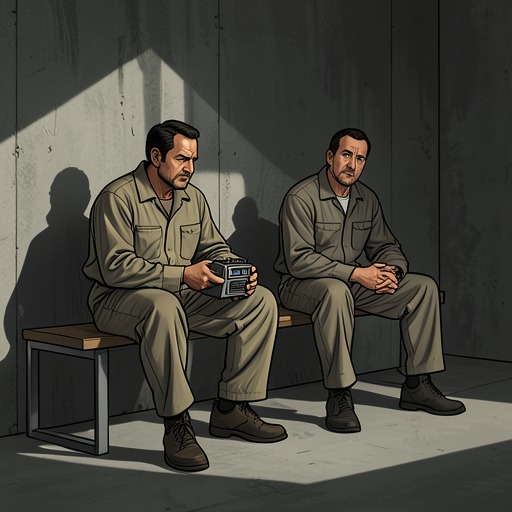
Molina introduces My Letter as a bolero while he and Valentin are talking in their cell. Its speaker writes at night, wonders whether an absent beloved also remembers their affair, and imagines that the two may never meet again. The song’s epistolary form makes longing sound like a message sent across enforced distance: the singer addresses someone who is absent, while the repeated pauses in the lyrics give the address a hesitant, intimate quality.
At first, Valentin laughs at the bolero. Later, he tells Molina that a letter he received says what the song says, and concedes that he may have laughed because it came too close to his own feelings. The reversal changes the song’s place in their conversation. What had seemed to Valentin like overwrought sentiment becomes a vocabulary for recognizing pain, and Molina’s taste in boleros receives a new, serious hearing. Valentin even asks Molina to recite the whole song again, attending to its words about living apart and remaining emotionally faithful.
The song’s value emerges not because Valentin abandons his earlier skepticism, but because he recognizes the gap between ridicule and hurt. Molina suggests that laughter can keep tears at bay; Valentin’s response confirms how a familiar lyric can expose feeling indirectly. When he later promises not to laugh at Molina’s boleros and singles out the lines about remembering a strange love affair, the change is small but consequential: he accepts the song as a medium through which they can speak together.
Separation and the Unsendable Message
The bolero’s imagery of letters and permanent separation acquires a sharper meaning when Valentin speaks about the dead comrade whose family had shared a hiding place with him. Valentin remembers changing the man’s baby son’s diapers and wonders what will become of the child, who is not yet three. He cannot write about the family without risking their identification, and he cannot safely write even to his own beloved, who now leads the group. The inability to send a message is not simply romantic distance; it is a condition imposed by clandestine political life.
Valentin adapts the song’s wording as he speaks, turning its promise that life may keep the lovers from meeting into the more absolute thought that life will never bring someone back. Molina corrects the lyric, but Valentin seizes on the word never and recognizes its full weight only then. The exchange makes the bolero’s conventional language of lovers parted by fate resonate with a concrete loss and with the danger that prevents communication. Song and political circumstance do not become identical, but the lyric gives Valentin a way to approach grief that ordinary explanation has not opened.
Bolero in the Embedded Film Stories
Bolero also belongs to the romantic film narratives Molina recounts. In one story, a reporter and a singer are separated by the singer’s dependence on a wealthy magnate, who has made her life a gilded confinement. After the reporter destroys an article to protect her, she offers him money; he refuses, leaves, and later writes song lyrics for her. When he returns to her home and finds her beside the magnate, he leaves the lyrics behind. The singer denies her feelings to the magnate, who strikes her, but afterward she finds the paper and presses it to her heart.
The song continues as performance rather than private writing. The singer leaves the magnate and returns to work, preparing to make her nightclub debut in a black-sequined gown. During rehearsal, the piano and maracas introduce her number; she begins with a restrained vocal line before the accompaniment swells. The sequence turns her unspoken attachment into a public act, while the reporter’s lyrics have already made the relationship legible to her. Elsewhere in the same tale, the reporter imagines the singer in his tequila glass and sings to her in a bar. Molina identifies this as the part when the two sing together, linking the song to an imagined reunion as well as to their actual separation.
The story does not resolve into a conventional reunion. The reporter becomes gravely ill after alcohol, hunger, and exposure, and the singer finds him only after searching hospitals and jails. In his fever delirium, he imagines that they are together on a sunlit fishermen’s wharf and then aboard a schooner bound for a new life. He whispers a new song and she repeats its words, but he dies without waking from the imagined voyage. The singer leaves the money from her jewels with the hospital sisters, then walks alone along the shore. Fishermen sing his earlier songs, carrying them into the lives of other listeners. Here song cannot undo death; it preserves the lovers’ words after their hoped-for future has become impossible.
Repetition, Recognition, and Memory
Across the cell conversation and the embedded melodrama, the bolero returns as a structure for speaking across absence. My Letter gives Valentin a lyric through which to recognize the painful force of political separation; the film songs make romantic longing audible first as performance, then as a memory shared beyond the singer and songwriter. In both settings, music carries feeling between people without erasing the circumstances that keep them apart.
The repeated songs also complicate the distinction between sentiment and truth. Valentin’s initial laughter does not disprove the bolero’s emotional force; it marks his resistance to a language that touches a wound. In the film story, the singer’s performance does not guarantee that she can return to the reporter in time. Songs can disclose attachment, prompt recognition, and outlast a speaker, but they cannot secure safety, communication, or survival. Their power lies instead in giving separation a memorable form—and in allowing that form to pass from one voice to another.